CrossFit Recovery Tools Fit Guide
A tough CrossFit week rarely fails in one single place. Monday's squats make your quads heavy, Tuesday's pull-ups light up your lats, double-under practice tightens your calves, and a heavy hinge day can leave your glutes feeling like they need their own rest day. That is where recovery tools become useful, but only if you choose them with the same discipline you use for training gear.
The point is not to buy every roller, ball, boot, scraper, and vibrating gadget in the recovery aisle. The practical move is simpler: match the tool to the body area, the pressure you can tolerate, the time you will actually use it, and the kind of WOD week you are trying to get through. This CrossFit recovery tools fit guide keeps the claims conservative, because foam rollers and massage balls are self-care tools, not medical treatment.
Disclosure: This guide may include affiliate links. If you click and buy, we may earn a commission at no extra cost to you. Read our about page and editorial policy for how we evaluate gear.
Why CrossFit Recovery Tools Need a Fit Guide
CrossFit creates a different recovery problem from a single-sport routine. A runner may mostly need calves, quads, hip flexors, and feet. A lifter may mostly care about hips, adductors, back tightness, and shoulders. A CrossFit athlete can hit both problems in the same week, then add gymnastics grips, jump-rope volume, rowing, wall balls, and barbell cycling.
That variety is why one recovery tool rarely covers everything. A long smooth roller can feel good across large muscle groups, but it will not reach a small knot under the foot or around the pec. A dense massage ball can target glutes and feet, but it can be too sharp for a beginner's quad. A vibrating roller can reduce the effort needed to create pressure, but it costs more, needs charging, and may be more tool than a two-session-per-week athlete needs.
The decision should start with the area that limits your training most often. If your issue is calves after double-unders, look for controlled pressure and portability. If it is upper-back stiffness after front squats and desk work, a broader roller may make more sense. If you already own a basic roller and still avoid using it because the routine takes effort, vibration may be a convenience upgrade rather than a magic recovery shortcut.
Research Scope and Claim Boundaries
This article uses official product pages for specifications and independent editorial sources for category context. It does not claim first-hand testing, injury treatment, or medical recovery outcomes.
Foam rolling research is useful but not unlimited. Public research summaries and editorial reviews commonly point to short-term range-of-motion and soreness-perception benefits, while also noting that the mechanism and ideal duration are still debated. In practice, that means recovery tools can be part of a warm-up or cooldown routine, but they should not be treated as a fix for sharp pain, swelling, numbness, or a suspected injury.
If pain changes your movement, keeps returning, or feels different from normal training soreness, stop guessing with gear and speak with a qualified clinician.
Quick Decision Table
| Training problem | Start with | Why it fits | Skip or upgrade when |
|---|---|---|---|
| General quad, hamstring, and upper-back tightness | Medium or firm foam roller | Covers larger areas with controllable pressure | Skip extra-firm texture if you are new to rolling |
| Glutes, feet, pecs, calves, and small tight spots | Massage ball | More precise than a full roller | Avoid if pressure feels sharp or causes guarding |
| Heavy training weeks where you want lower-effort pressure | Vibrating roller | Adds vibration and can reduce the effort of rolling | Skip if you will not charge it or use guided routines |
| Travel, gym bag, and quick cooldowns | Compact ball or short roller | Easy to keep with shoes, rope, and grips | Skip oversized rollers if storage is the barrier |
| Injury rehab or persistent pain | Professional advice first | Tools cannot diagnose or treat injury | Do not self-treat serious pain with gear |
Tool Type 1: Broad Foam Rollers for Quads, Hamstrings, and Back Tension
A broad foam roller is the safest starting point for most CrossFit athletes because it works across the largest number of WOD-related areas. Quads after squats, hamstrings after deadlifts, calves after box jumps, and upper back after front-rack work all need surface area more than pinpoint pressure.
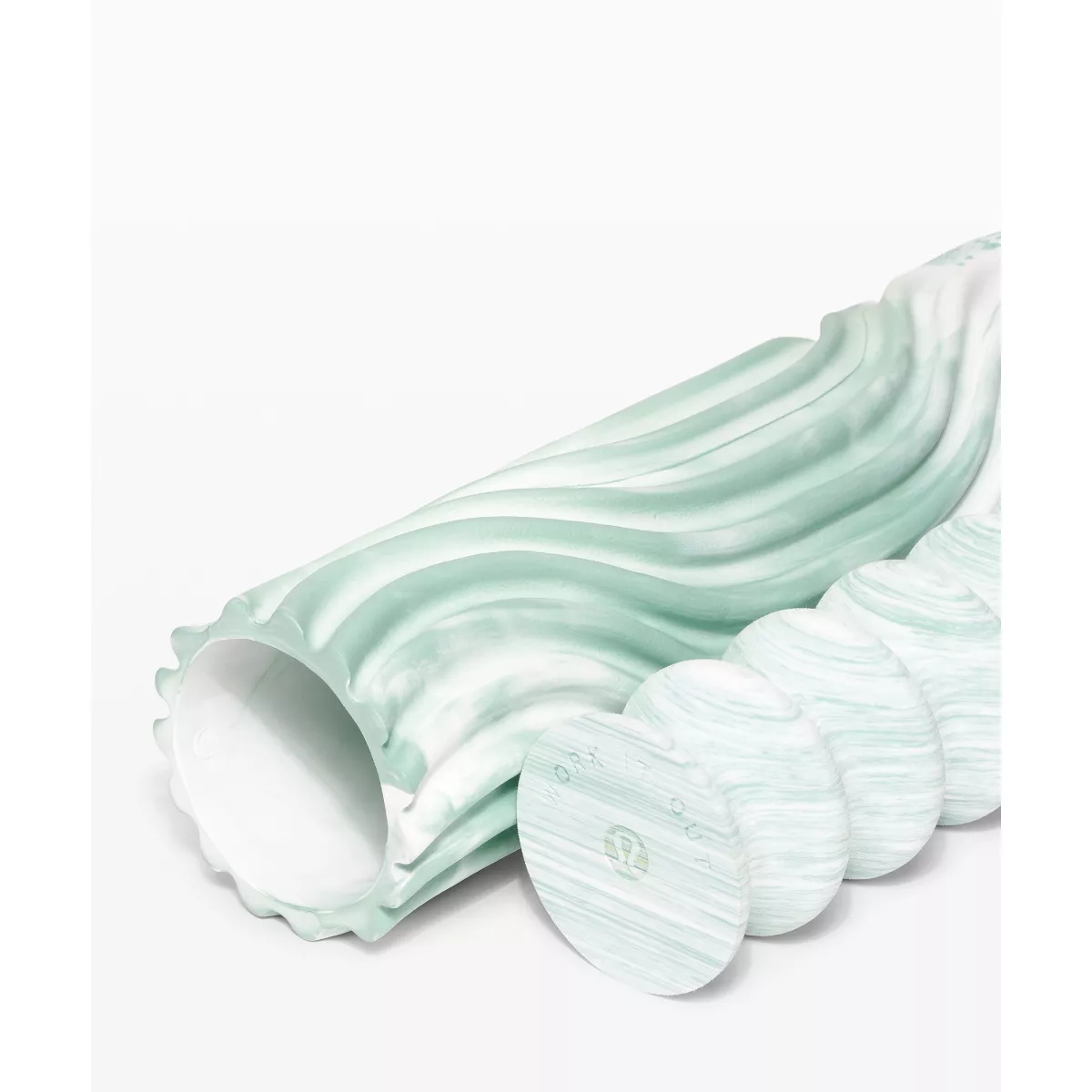
The lululemon Double Roller is a useful example of the category because its official product page describes a two-in-one design: the outer roller is intended for arms and legs, while the inner roller pulls out for back tension. lululemon lists the overall dimensions as 50.8 cm by 13 cm, weight as 0.8 kg, and material as ethylene-vinyl acetate. Those details matter because the tool is not just about pressure; it is also about whether it is long enough for your routine and easy enough to store.
Choose this style when you want one home tool for broad rolling after mixed WODs. It is less precise than a ball, but it is more approachable if you are still building the habit. A roller that feels slightly too gentle but gets used three times per week is more useful than an aggressive roller that stays in the corner.
Check the current product details on the official lululemon Double Roller page before buying, because colorways and stock can change.
Tool Type 2: Massage Balls for Glutes, Feet, Pecs, and Small Spots
A ball is the opposite of a broad roller: less coverage, more precision. That can be exactly what you want after rope climbs, toes-to-bar, rowing, or long desk days layered on top of training. Small tools are especially useful around glutes, feet, pecs, and calves, where a large roller may miss the angle.
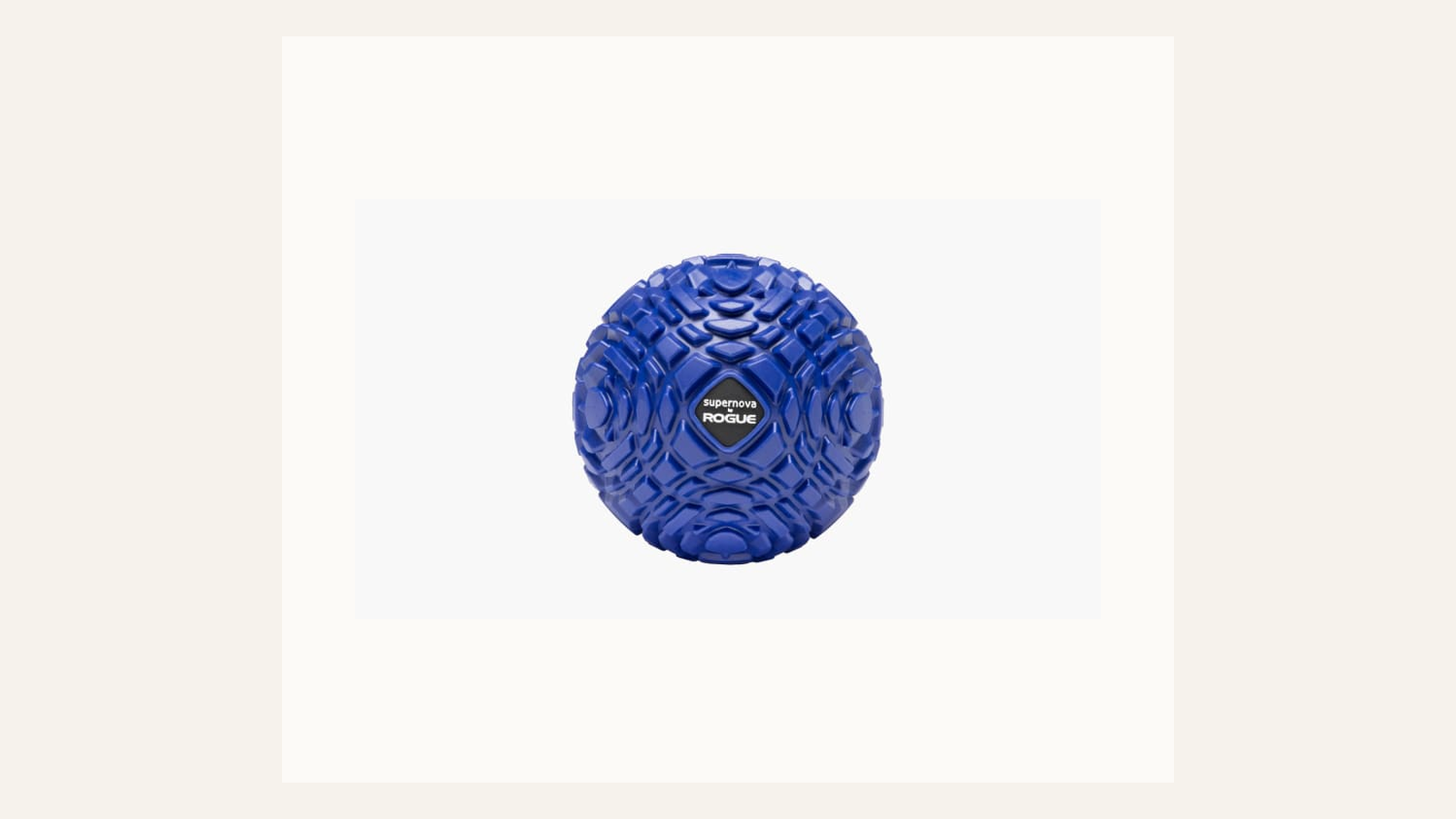
The Rogue / The Ready State TRS Supernova 2.0 is a good example of a targeted tool. Rogue's official page lists it as a 120mm ball with a nylon frame, TPE tread, updated groove pattern, blue color, and latex-free construction. It is built as an alternative to traditional foam rollers and smaller massage balls, with enough size to create broad pressure while still being more targeted than a cylinder.
This type of tool is not automatically better because it is more intense. For newer athletes, too much pressure can make you tense up and rush the routine. Start with partial body weight against a wall before putting the full tool between your body and the floor. If you cannot breathe normally while using it, reduce the pressure.
Check official details on the Rogue TRS Supernova 2.0 page. For UK shoppers, verify local availability and shipping rather than assuming Australian pricing applies.
Tool Type 3: Vibrating Rollers for Convenience and Lower-Effort Pressure
Vibrating rollers are the upgrade path, not the starting point for everyone. They can make a rolling routine feel easier to sustain because the tool adds vibration while you apply body weight. That may be useful before a heavy lower-body session, after a long travel day, or when you already know you will use a recovery tool consistently.
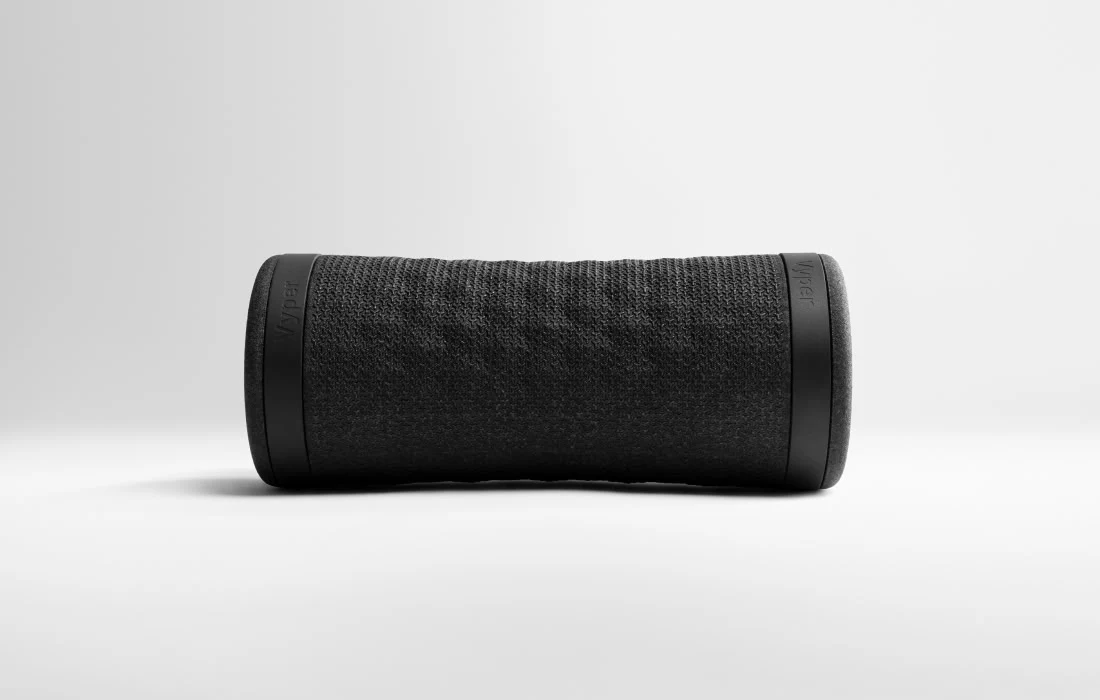
Hyperice's official Vyper 3 page lists three speeds of vibration, dimensions of 13 x 5.4 x 5.4 inches, up to two hours of battery life, Bluetooth, TSA-friendly design, and a 34W motor. Those specs explain the tradeoff clearly: you get power, settings, and convenience, but you also add charging, cost, and device care.
Choose a vibrating roller if a standard roller works but feels like a chore, or if you want a compact powered tool for warm-up and cooldown routines. Skip it if you are mainly trying to solve one small foot or pec spot; a ball will usually be simpler. Skip it if you train casually and have not yet built a five-minute recovery habit.
See the official Hyperice Vyper 3 product page for current specifications and availability.
Match the Tool to Your WOD Week
For barbell-heavy weeks, prioritize hips, quads, glutes, and upper back. A broad roller handles the main muscle groups, while a ball can help around glutes and feet. This pairs naturally with belt content such as our CrossFit weightlifting belt fit guide and CrossFit weightlifting belts for WODs, because heavy lifting gear and recovery tools should support the same movement pattern rather than fight it.
For gymnastics-heavy weeks, think about lats, pecs, forearms, and hands. A massage ball is more useful here than a huge roller, especially around the chest and shoulder area where broad cylinders are awkward. If pull-ups and toes-to-bar are a main focus, pair this guide with our CrossFit grips for pull-ups and toes-to-bar.
For conditioning-heavy weeks, calves, feet, and hip flexors usually deserve attention. A compact ball is easy to keep near your jump rope, while a medium roller helps with quads and hamstrings after box jumps, running, and rowing. See our CrossFit jump ropes for double-unders if your recovery issue starts with rope volume.
For shoe-heavy decisions, recovery tools will not fix a bad trainer fit. If your feet or calves always feel beaten up after mixed WODs, check whether your shoes are part of the problem. Our Nike Metcon 9 vs Reebok Nano X4 vs TYR CXT-2 comparison covers trainer stability and WOD transition tradeoffs.
Pressure: Start Lower Than Your Ego Wants
The most common mistake is buying the hardest tool first. CrossFit athletes are used to discomfort, but recovery work should not become another max-effort event. Useful pressure feels strong enough to make you slow down, not so sharp that you hold your breath or brace against it.
Use a wall before the floor if the tool feels too intense. Use hands and feet to offload weight. Stay on muscle tissue rather than joints, bones, or the lower back. Limit time on a single sensitive point, then move gradually through the area.
The right pressure is the one you can repeat. If a tool makes you dread the routine, it is the wrong fit even if the specs look impressive.
Portability, Cleaning, and Gym-Bag Reality
Recovery gear has to live somewhere. A long roller is great at home but awkward in a small flat or shared gym bag. A ball is easy to carry but easy to lose. A vibrating tool can travel, but only if you remember the charger and do not mind the extra weight.
Cleaning matters too. CrossFit gear picks up chalk, sweat, and floor dust quickly. Smooth or sealed surfaces are easier to wipe down. Deep grooves can feel useful on tissue but need more attention after use.
If you train mostly at home, choose the tool that gives you the widest coverage. If you train at a box and commute, choose the tool you will actually carry. If you travel for work and train in hotel gyms, compact tools beat perfect tools.
What Not to Buy First
Do not buy a full recovery stack before you know your pattern. Compression boots, advanced percussion devices, scraping tools, and multiple roller densities can all have a place, but they are not the first move for a cold-start routine.
Start with one broad tool and one targeted tool if your budget allows. For many athletes, that means a medium or firm roller plus a massage ball. Add vibration later if you already use those tools and want faster setup or lower-effort pressure.
Also avoid tools that make claims you cannot verify. Good product pages provide dimensions, materials, use cases, warranty or return information, and clear imagery. Be cautious with vague promises about healing, detoxing, or guaranteed recovery speed.
Buying Checklist
Before you buy a CrossFit recovery tool, answer these questions:
- Which body area needs attention most often?
- Do you need broad pressure or pinpoint pressure?
- Will you use it at home, at the gym, or while travelling?
- Can you control the pressure without pain or bracing?
- Is the surface easy to clean after a sweaty session?
- Are the product specs clear enough to compare?
- Is this tool solving a real training problem, or just adding gear?
If you cannot answer the first two questions, choose a simpler tool and spend the savings on coaching, better shoes, or a more consistent training schedule.
FAQ
Are CrossFit recovery tools necessary?
No. They are optional self-care tools, not mandatory equipment. They can help you build a more consistent warm-up or cooldown routine, but sleep, training load, food, hydration, and sensible scaling matter more than any roller or ball.
Should I use a foam roller before or after a WOD?
Either can make sense. Before training, keep it brief and follow with movement that matches the workout. After training, use lower pressure and avoid turning cooldown into another intense session. If rolling changes pain or movement quality in a bad way, stop.
Is a massage ball better than a foam roller?
It depends on the area. A ball is better for small spots such as feet, glutes, pecs, and calves. A roller is better for broad areas such as quads, hamstrings, and upper back. Many athletes eventually use both.
Are vibrating rollers worth it?
They can be worth it if you already use recovery tools and want a more convenient routine. They are less compelling as a first purchase because they cost more, need charging, and do not replace basic pressure control.
Can recovery tools fix an injury?
No. Do not use this guide as medical advice. If pain is sharp, persistent, one-sided in a worrying way, linked to swelling or numbness, or changes how you move, speak with a qualified health professional.
Title Candidates
- CrossFit Recovery Tools Fit Guide: Choose Foam Rollers, Massage Balls, and Vibration for Tough WOD Weeks
- Foam Roller or Massage Ball for CrossFit? A Practical Recovery Tool Fit Guide
- Stop Buying Random Recovery Gear: Match CrossFit Tools to Your WOD Week
- CrossFit Recovery Tools by Body Area: Roller, Ball, or Vibration?
- Which Recovery Tool Fits Your CrossFit Week: Foam Roller, Ball, or Vyper?
Sources
- Rogue Australia, TRS Supernova 2.0 official product page
- lululemon Germany, Double Roller official product page
- Hyperice, Vyper 3 official product page
- The Strategist, foam roller category recommendations, updated April 24, 2026
- Tom's Guide, foam roller testing and category context, 2025
- Time, foam rolling evidence overview
- SELF, foam rolling safety and pressure guidance