Knee sleeves look simple until they are the wrong kind of simple. A pair that feels strong during back squats can feel bulky when the workout turns into burpees, box step-overs, rowing, and lunges. A thinner sleeve may move well through a long chipper but feel underbuilt when the day is heavy triples from the rack.
The practical answer is not to buy the stiffest sleeve you can find. The better starting point is your training week. A CrossFit knee sleeves fit guide should help you decide how much compression and warmth you want, how much knee bend you need, and whether the sleeve will stay out of the way when the workout changes pace.
This guide is based on manufacturer information and editorial source review, not first-hand lab testing. CrossFit Norwich is reader-supported; see our /about/ page and /editorial-policy/ for how we handle product guidance and commercial links.
CrossFit knee sleeves fit guide: start with your WOD week
A sleeve for CrossFit has to do more than sit under a barbell. It may need to handle squats, lunges, wall balls, step-ups, deadlifts, cleans, rowing, and running in the same week. That is why thickness matters, but it is not the only decision.
Use this simple split:
| Training pattern | Practical sleeve direction | Why it matters |
|---|---|---|
| Mixed metcons, lunges, rowing, wall balls | 5mm sleeve | Usually easier to bend through repeated movement |
| Heavy squats, strength blocks, lower-rep lifting | 7mm sleeve | More compression and structure for heavy sessions |
| Occasional support only | Lighter or medium support | Less gear friction and easier packing |
| Injury, instability, or medical concern | Ask a clinician | A sleeve is not the same as a brace |
A third-party Health.com guide separates knee sleeves from braces: braces are more about structural support and limiting movement, while sleeves mainly provide compression. That distinction matters. If you need medical guidance, post-injury support, or a device that limits joint motion, this shopping guide is not a substitute for professional advice.
5mm vs 7mm knee sleeves for CrossFit
The most common CrossFit decision is 5mm vs 7mm. Both can make sense, but they fit different sessions.
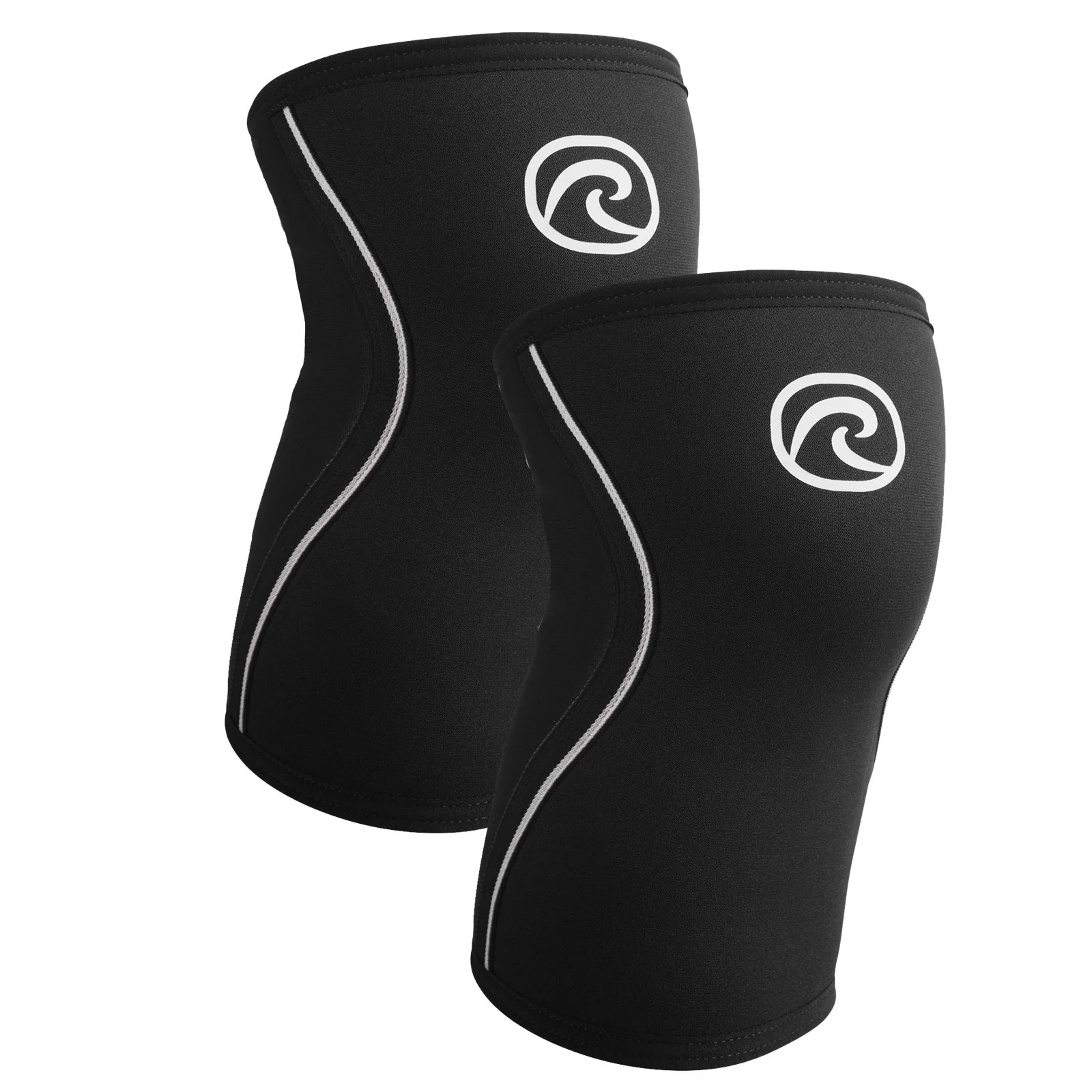
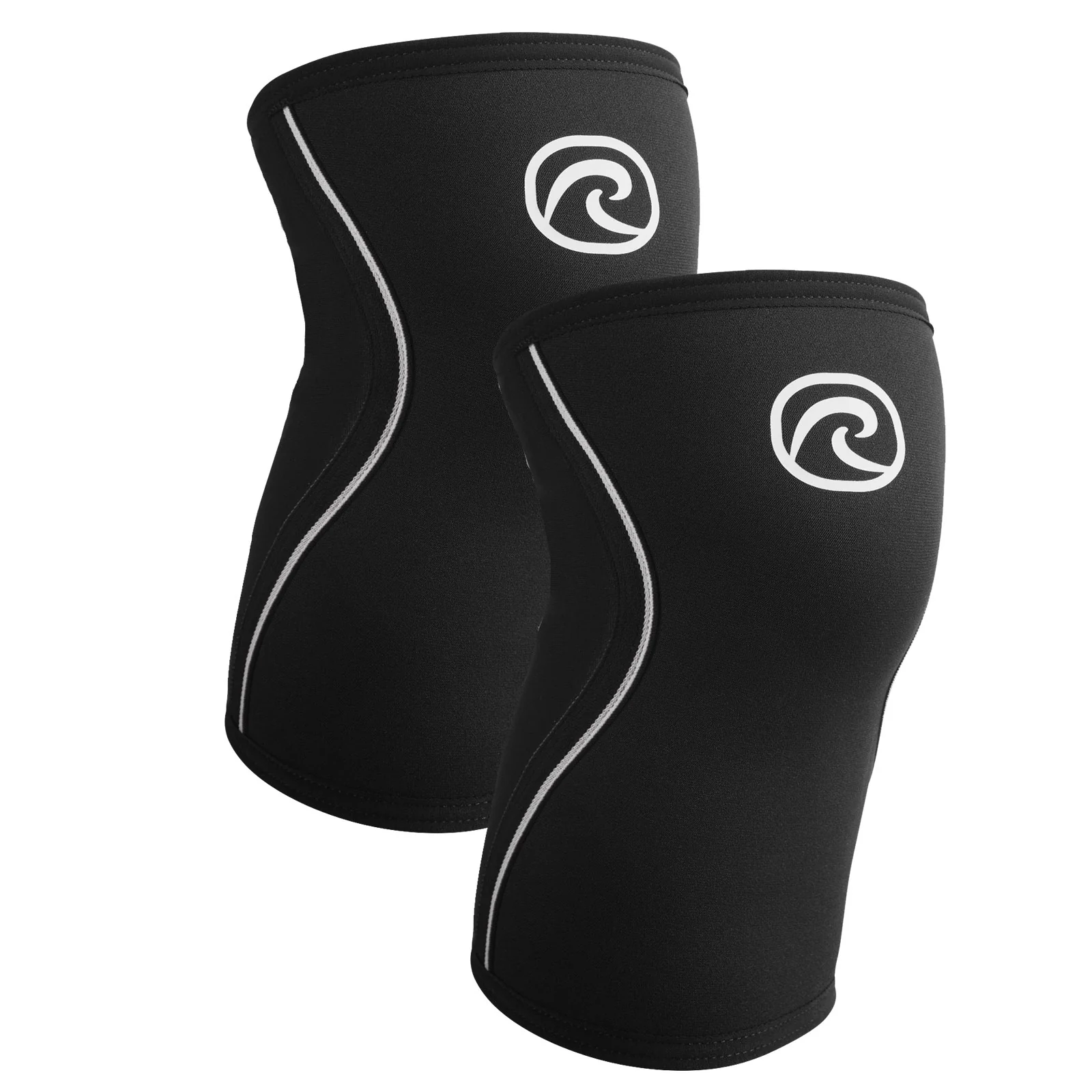
A 5mm sleeve is the safer first look for mixed WODs. Rehband describes its RX Knee Sleeve 5mm as medium support for sports and workouts that need both support and mobility, including weightlifting, functional fitness, and HIIT. That makes the category useful when your week includes front squats one day and a long conditioning workout the next.
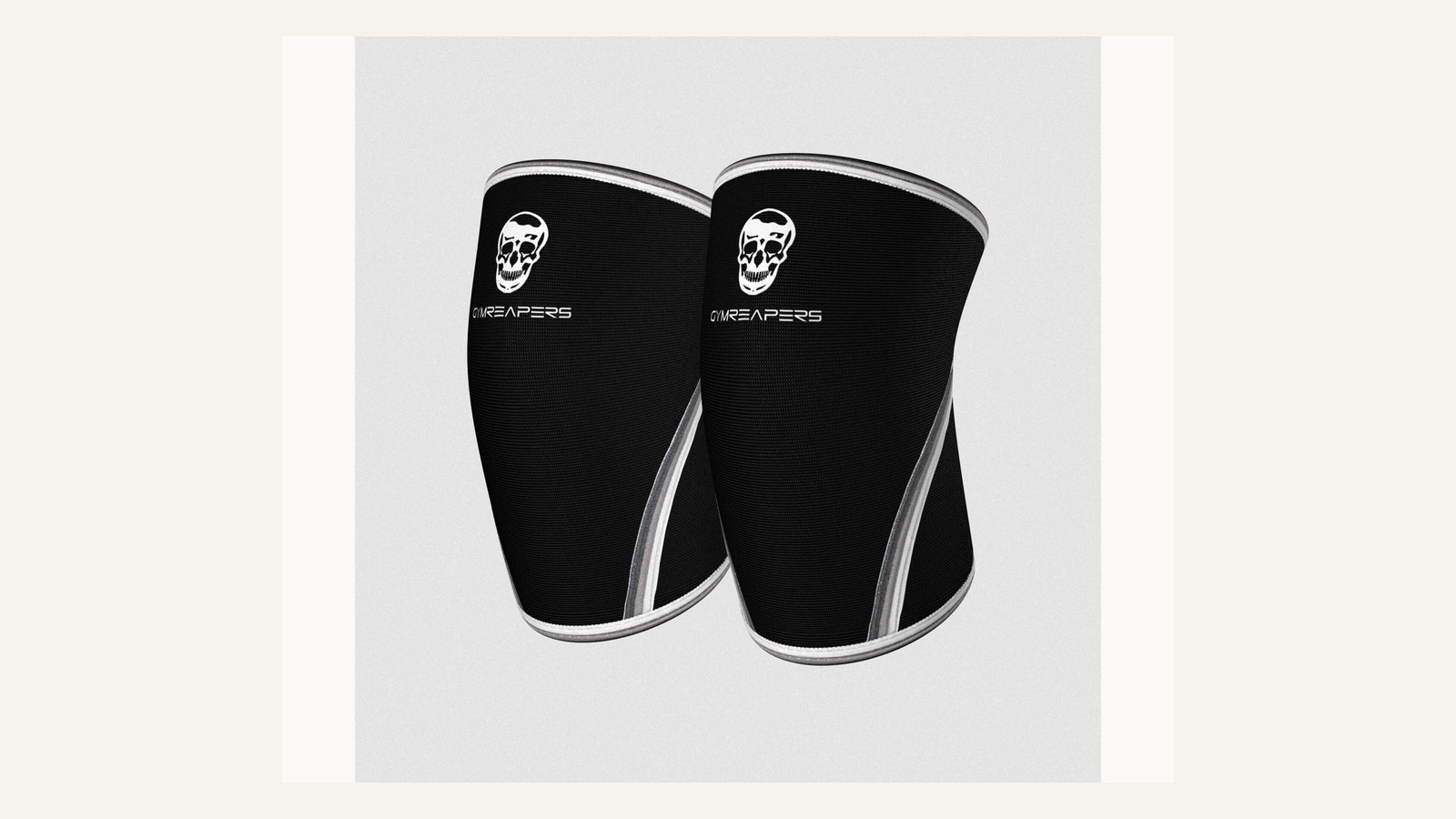
A 7mm sleeve is more specialized. Rehband describes its RX Knee Sleeve 7mm as a heavy duty support for shorter workouts and heavy activities such as weightlifting. Gymreapers lists its 7MM Knee Sleeves as 7mm neoprene sleeves with reinforced stitching, sold in pairs, with competition approvals listed on the product page. In plain terms: 7mm is usually the heavier-feeling choice.
The tradeoff is movement interference. A thicker sleeve may feel better for heavy squat confidence, but it can also feel more noticeable when you are dropping into burpees, cycling lunges, or moving quickly between stations. If your CrossFit week is mostly class WODs with only one heavy lower-body day, a 5mm sleeve may be more useful than a stiff 7mm pair.
How to measure knee sleeves without guessing
Do not buy knee sleeves by your trouser size or by copying a training partner. Measure the way the brand asks.
Gymreapers tells shoppers to extend the knee and measure around the kneecap, then match that number to its size chart. Its listed black/white 7mm size ranges run from S at 11.8-13 inches through 2XL at 17-18.3 inches. The page also notes that a tighter fit may mean choosing one size smaller than the chart suggests, but that is brand-specific guidance, not a universal rule.
Rehband uses its own size guidance on the product pages and makes clear that size guides are recommendations. That is a useful reminder: two sleeves with the same thickness can still feel different because panel shape, seam layout, taper, and fabric stretch are not identical.
A practical fit should feel secure without creating numbness, sharp pinching, or a fight every time you put the sleeve on. If you need a sleeve for long mixed sessions, avoid going so tight that you are distracted between movements. If you need it mainly for heavy lifting, a firmer fit can make sense, but only if it still lets you set up and move cleanly.
Choose by workout scenario, not by ego
For class athletes who train three to five days per week, the most useful sleeve is often the one you will actually wear. That sounds obvious, but it prevents overbuying. If a sleeve feels too stiff for most WODs, it becomes a bag item rather than a training tool.
Choose a 5mm sleeve when your week includes:
- wall balls, step-ups, rowing, lunges, and burpees
- Olympic lifting technique work rather than max-effort squats
- workouts where quick transitions matter
- a preference for warmth and light compression without a locked-in feel
Choose a 7mm sleeve when your week includes:
- squat-focused strength blocks
- heavier cleans, pulls, and lower-rep barbell work
- powerlifting-style accessory sessions
- shorter workouts where support matters more than fast movement changes
Skip the “one sleeve for everything” mindset if your training is split. Some athletes keep a lighter pair for mixed days and a heavier pair for strength days. New buyers do not need to start there, but it explains why two people in the same gym can both be right while choosing different sleeves.
Product examples to understand the category
These are not lab-tested rankings. They are examples that show how the fit decision works across real product pages.
Gymreapers 7MM Knee Sleeves
Gymreapers lists its 7MM Knee Sleeves as 7mm neoprene sleeves with reinforced stitching, sold in pairs, and includes a carrying bag. The page also lists IPF, IPL, USPA, and USAPL approval, plus USAW and Wodapalooza references. For a CrossFit shopper, the useful signal is not the approval logo by itself; it is that this is a thicker, lifting-oriented sleeve rather than a minimalist compression sleeve.
Consider this type of sleeve if your main concern is heavy lower-body days. Be more cautious if your workouts often include long runs, high-volume burpees, or long sets of lunges where stiffness can become annoying.
Rehband RX Knee Sleeve 5mm
Rehband positions the RX Knee Sleeve 5mm as medium support with warmth, compression, and flexibility. Its product details include a patented anatomical design, 4-panel construction, 5mm SBR/neoprene, and right-or-left-knee compatibility.
This is the more natural starting point for mixed functional fitness. It is still a real training sleeve, but the official positioning leans toward mobility as well as support. If you are buying your first pair for general CrossFit classes, this category is easier to justify than jumping straight into the thickest sleeve.
Rehband RX Knee Sleeve 7mm
Rehband describes the RX Knee Sleeve 7mm as heavy duty support for shorter workouts and heavier activities. The listed construction includes 7mm SBR/neoprene and the same broad functional training and weightlifting context.
This is the better comparison point if you like the Rehband shape but want more structure than the 5mm version. The decision is not brand first; it is thickness first. Decide whether your actual training needs the heavier feel, then compare brands, sizes, and return policy.
Common knee sleeve mistakes
The first mistake is treating knee sleeves as injury treatment. They are training gear. They may provide warmth and compression, but they are not a diagnosis, rehab plan, or substitute for a brace when a brace is what you need.
The second mistake is choosing 7mm because it sounds more serious. More thickness can be useful, but CrossFit rewards movement efficiency. If the sleeve changes how you row, lunge, or cycle reps, the extra structure may not be worth it on mixed days.
The third mistake is ignoring care instructions. Neoprene sleeves absorb sweat and can get unpleasant quickly. Gymreapers advises hand washing and air drying, and Rehband lists machine washing at 40°C with air drying only for its RX pages. Either way, never assume a hot dryer is harmless.
The fourth mistake is forgetting the rest of your setup. Knee sleeves do not replace good shoe choice for stable lifting, and they do not replace smart recovery habits. If your squat days also need torso support, read our CrossFit weightlifting belt fit guide. If your lower-body sessions expose shoe problems, compare our Nike Metcon 9 vs Reebok Nano X4 vs TYR CXT-2 trainer guide.
How knee sleeves fit into your CrossFit gear system
Think of knee sleeves as one support layer in a bigger kit. Shoes handle ground contact and lateral stability. Belts help with bracing on heavy lifts. Grips protect your hands during bar work. Recovery tools help you manage tight training weeks without pretending to treat an injury.
If you are building a starter kit, prioritize gear by the workouts you repeat most. For barbell-heavy weeks, knee sleeves and a belt may matter more. For gymnastics-heavy weeks, start with our CrossFit grips for pull-ups and toes-to-bar. For lower-body fatigue after tough WODs, use our CrossFit recovery tools fit guide to choose foam rollers, massage balls, and vibration tools without overstating recovery claims.
If you already own a belt, our CrossFit weightlifting belts for WODs can help you decide whether your next purchase should be more support gear or a more flexible training accessory.
Buying checklist before you order
Before buying, answer these questions:
- Do I need this for mixed WODs, heavy strength days, or both?
- Am I choosing 5mm or 7mm because of actual training use, not ego?
- Did I measure my knee using the brand's instructions?
- Does the brand sell singles or pairs?
- What is the return or exchange policy if the fit is wrong?
- Will this sleeve interfere with the movements I do most?
- Am I avoiding medical claims and using the sleeve only as training gear?
If the answers point to mixed use, start with a 5mm-style sleeve. If the answers point to heavy lower-body strength sessions, compare 7mm options. If the answers involve pain, instability, surgery, or injury recovery, stop shopping and ask a qualified professional.
FAQ
Are 5mm or 7mm knee sleeves better for CrossFit?
Neither is automatically better. A 5mm sleeve usually makes more sense for mixed CrossFit classes because it balances compression and movement. A 7mm sleeve is more appropriate for heavy squat-focused days or shorter strength sessions where structure matters more than fast transitions.
Should knee sleeves feel tight?
They should feel secure, but not alarming. A good fit should not create numbness, sharp pinching, or major distraction during movement. Use the brand's measurement instructions first, then consider whether you prefer a training fit or a tighter lifting-focused fit.
Can knee sleeves replace knee braces?
No. Sleeves and braces are different categories. Sleeves mainly provide compression and warmth. Braces can be designed to limit motion or add structural support. If you are dealing with injury, instability, or medical advice, follow a clinician's recommendation instead of relying on a shopping guide.
Do I need knee sleeves for every WOD?
No. Many athletes only use them for squat-heavy or high-volume lower-body days. If a sleeve makes running, rowing, or burpees feel worse, it may be better saved for strength work rather than worn automatically.
How should I care for neoprene knee sleeves?
Follow the brand's care label. As a general rule, avoid hot drying and let sleeves air dry fully between sessions. Gym bags trap moisture, so do not leave sweaty sleeves zipped up overnight if you want them to last and smell reasonable.
Sources
- Gymreapers 7MM Knee Sleeves official product page
- Rehband RX Knee Sleeve 5mm official product page
- Rehband RX Knee Sleeve 7mm official product page
- Health.com knee compression sleeve editorial guide
For more on how we separate manufacturer claims from editorial guidance, read our /editorial-policy/.
Title Candidates
- CrossFit Knee Sleeves Fit Guide: Choose 5mm, 7mm, and WOD-Friendly Support
- 5mm vs 7mm Knee Sleeves for CrossFit: What to Choose Before Squat Day
- Knee Sleeves for CrossFit WODs: A Practical Fit Guide for Support and Mobility
- Before You Buy CrossFit Knee Sleeves, Check These 7 Fit Details
- CrossFit Knee Support Without Overbuying: 5mm vs 7mm Sleeve Guide