Disclosure: Some outbound product links may be affiliate links. We may earn a commission if you buy through them, at no extra cost to you. Our review process is explained on our editorial policy, and you can learn more about the team behind this site on our about page.
CrossFit Wrist Wraps Fit Guide: Choose Support for Pressing, Front Rack Work, and Fast WOD Transitions
A wrist wrap can feel great during strict press and annoying ten seconds later when the workout asks for cleans, burpees, or pull-ups. That is the basic CrossFit problem: the wrap has to support the wrist without turning every transition into a gear adjustment break.
The practical answer is not “buy the stiffest wrap.” The better starting point is to match support, length, and closure style to the movements you see most often. Heavy pressing needs more structure. Front-rack work needs enough give to let the elbows come through. Fast mixed WODs need wraps you can loosen without fully removing.
This CrossFit wrist wraps fit guide focuses on that tradeoff. It uses official product specs from Rogue Fitness pages checked in July 2026 and does not claim first-hand testing. Prices, colors, and stock can change, so treat the listed prices as a snapshot rather than a buying promise.
How CrossFit Wrist Wraps Should Fit Your Training
Good wrist wraps should make the wrist feel more organized under load, not locked into one position for the whole session. If the wrap is so stiff that you avoid the front rack, fight the bar in cleans, or keep removing it before gymnastics work, it may be too much wrap for a typical CrossFit week.
For most athletes, the useful range sits in the middle: enough compression for push press, thrusters, handstand push-up practice, and bench work, but enough adjustability that you can loosen the wrap between exercises. Maximum-stiffness wraps make more sense when the workout is built around heavy sets, low reps, or dedicated pressing strength.
A simple fit test helps. Put the wrap on, make a fist, then move through a light front rack, overhead press, and push-up position. The wrap should feel secure in the press and still let you set a usable rack position. If your wrist feels supported but your elbows cannot come forward, the wrap may be too stiff, too long, or too tight for mixed WOD use.
Key Fit Factors: Length, Stiffness, Closure, and Mobility
Length changes both support and adjustment time. Shorter wraps are quicker and usually less bulky. Medium wraps add more overlap and a firmer feel. Long wraps can create the most compression, but they take more time to wrap and may feel excessive during metcons.
Stiffness matters just as much. A flexible wrap gives light support and usually works better when the session includes Olympic lifts, dumbbell work, burpees, or gymnastics transitions. A balanced wrap is the safer all-rounder for athletes who press, clean, and do conditioning in the same week. A rigid wrap is most useful when the main purpose is heavy pressing or low-rep strength work.
Closure style affects WOD flow. Traditional hook-and-loop wraps are familiar and secure, but you often need to rewrap them to change tension. Twist-tight wraps are built around faster tension changes, which can be useful when a workout moves from barbell work into bodyweight movements.
The final factor is honesty about pain. Wrist wraps are support gear, not medical treatment. If pressing or front-rack work causes persistent pain, the useful next step is coaching, load management, or qualified medical advice, not simply a stiffer wrap.
Decision Tree: Which Wrist Wrap Setup Fits Your WODs?
If your week is mostly mixed CrossFit classes, start with a flexible or balanced wrap. You want support for pressing and overhead work, but you also need to get through cleans, dumbbells, box work, rowing, and pull-ups without constantly stripping gear off.
If your main issue is heavy strict press, bench, push press, or handstand push-up volume, look at a firmer wrap or a longer length. More overlap can create a more locked-in feel, but it also reduces the quick-movement comfort that many WODs need.
If front-rack mobility is already tight, avoid going straight to the longest or stiffest option. A wrap that feels powerful for one press rep can become a problem if it blocks the rack position in cleans or thrusters. Start moderate, then increase support only if the lighter setup is clearly not enough.
If transition speed matters more than maximum compression, consider a twist-tight design. The ability to tighten for a barbell set and loosen before the next movement can matter more than raw stiffness in a class workout.
Option 1: Rogue Wrist Wraps 2.0 for Adjustable Support Levels
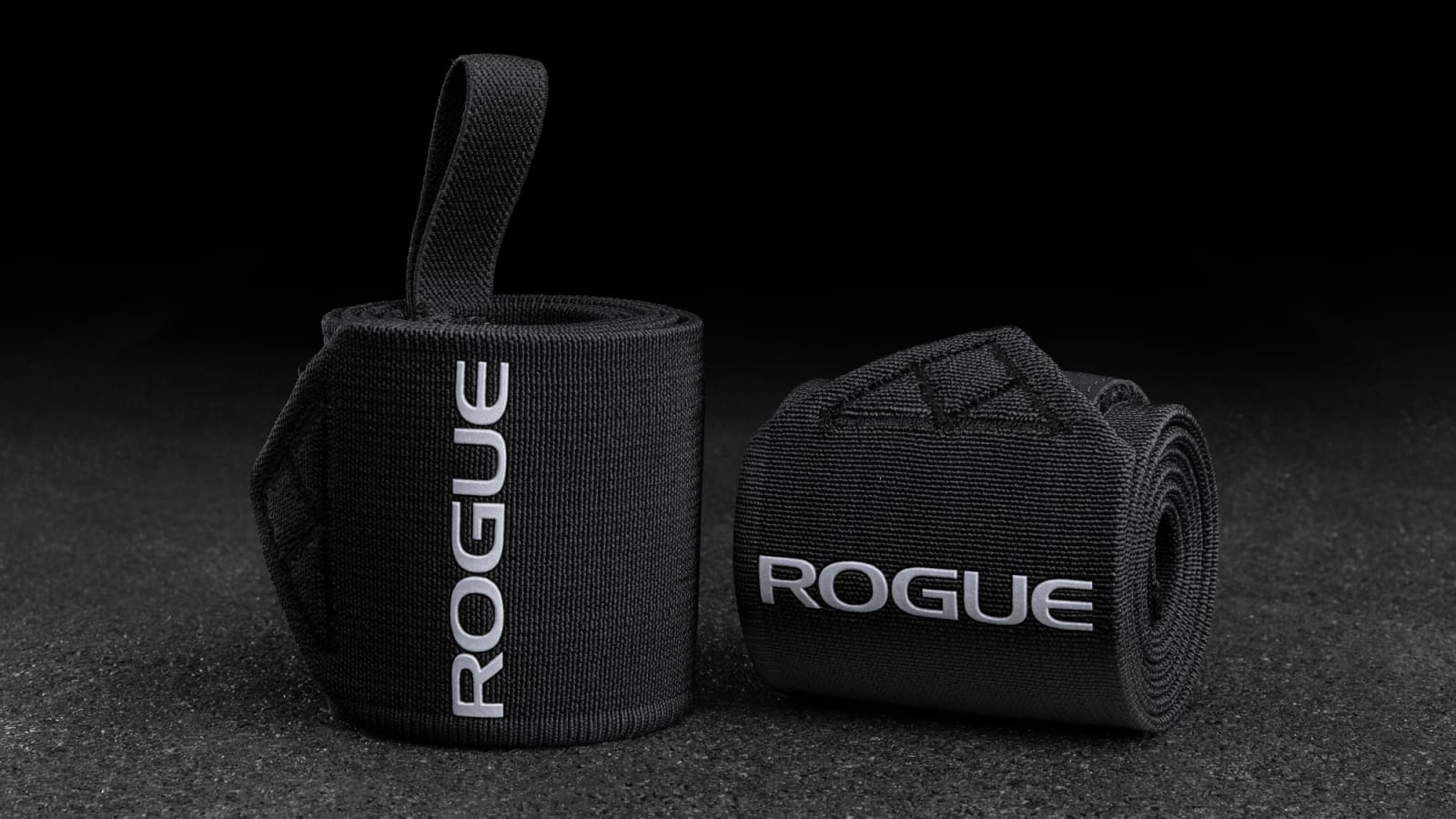
Rogue Wrist Wraps 2.0 are the most structured option in this guide because the product line is split into STRETCH, FLEX, and RIGID versions. Rogue lists three lengths: 17", 24", and 37.5", with a 3" width, thumb loop, left/right design, and proprietary polyester blend. The official page listed the price at $23.50 when checked in July 2026.
The useful part for CrossFit is the ability to choose support level before you choose length. STRETCH is the safer place to start for higher-rep work and longer sessions. FLEX fits the middle lane for Olympic lifts and general strength work. RIGID is the heavier-duty choice for low-rep pressing days, but it is also the version most likely to feel like too much in a mixed WOD.
Pick this option if you already know whether you want flexible, balanced, or stiff support. Skip the rigid version as a first pair unless your main training problem is heavy pressing stability rather than WOD transitions.
Option 2: Rogue Wrist Wraps for a Familiar Hook-and-Loop Setup
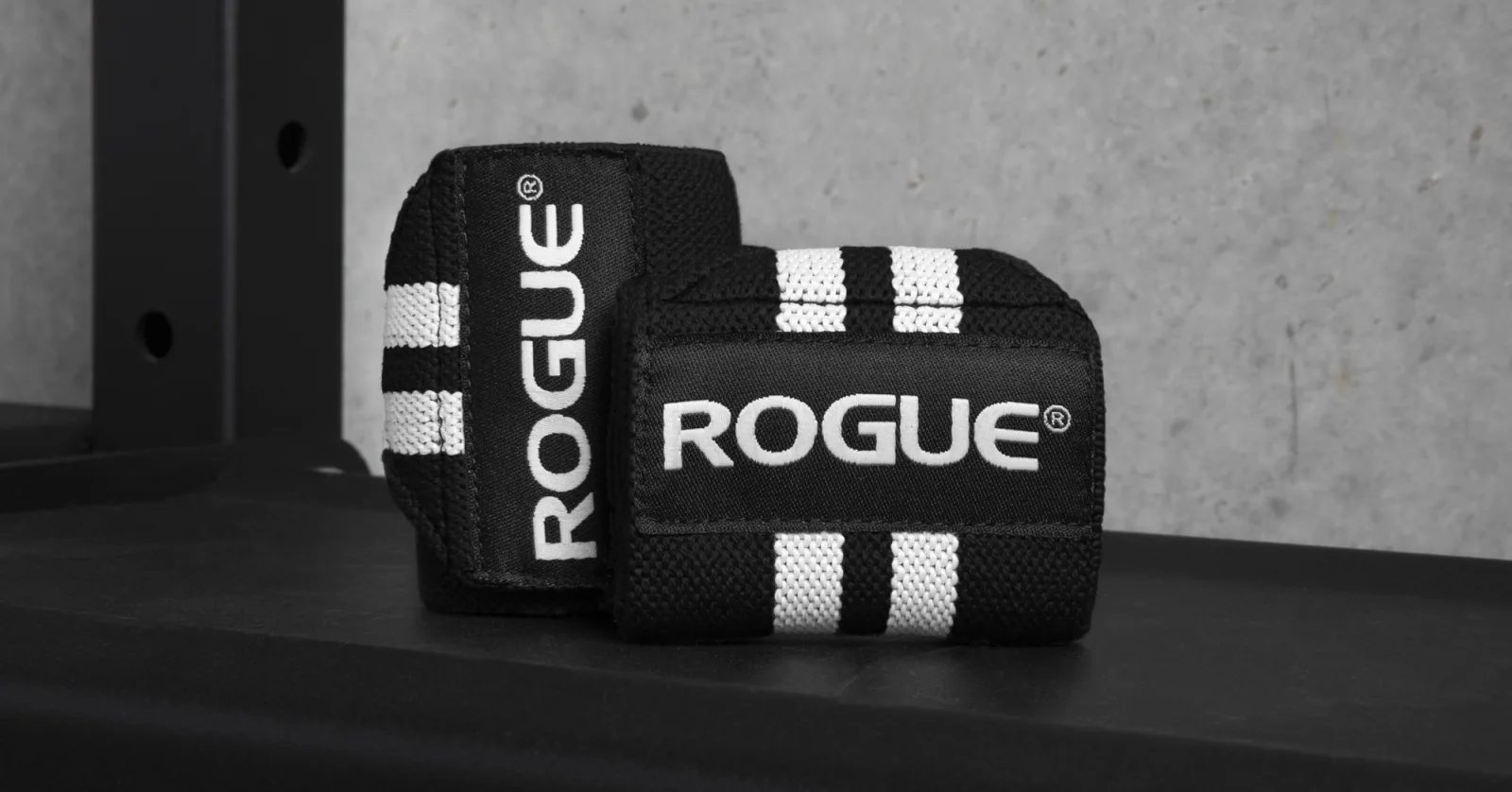
Rogue Wrist Wraps are the simpler traditional option. Rogue lists them in 12", 18", and 24" lengths, 3" width, with a thumb loop and hook-and-loop closure. The listed material blend is 40% elastic, 10% polyester, and 50% cotton. The official page listed the price at $21.00 when checked in July 2026.
For CrossFit, the 12" or 18" lengths are the more practical starting point if you want support without much bulk. Rogue’s own sizing notes point 12" and 18" toward Olympic lifting mobility, while 18" and 24" increase support for powerlifting and strongman-style work. That maps well to CrossFit: shorter for front-rack and WOD movement, longer for heavier pressing or strength-focused days.
Choose these if you want a familiar wrap that is easy to understand and available in multiple lengths. Be careful with the 24" length if your workouts regularly include cleans, thrusters, or fast transitions.
Option 3: Rogue Wraps for Fast Tension Changes
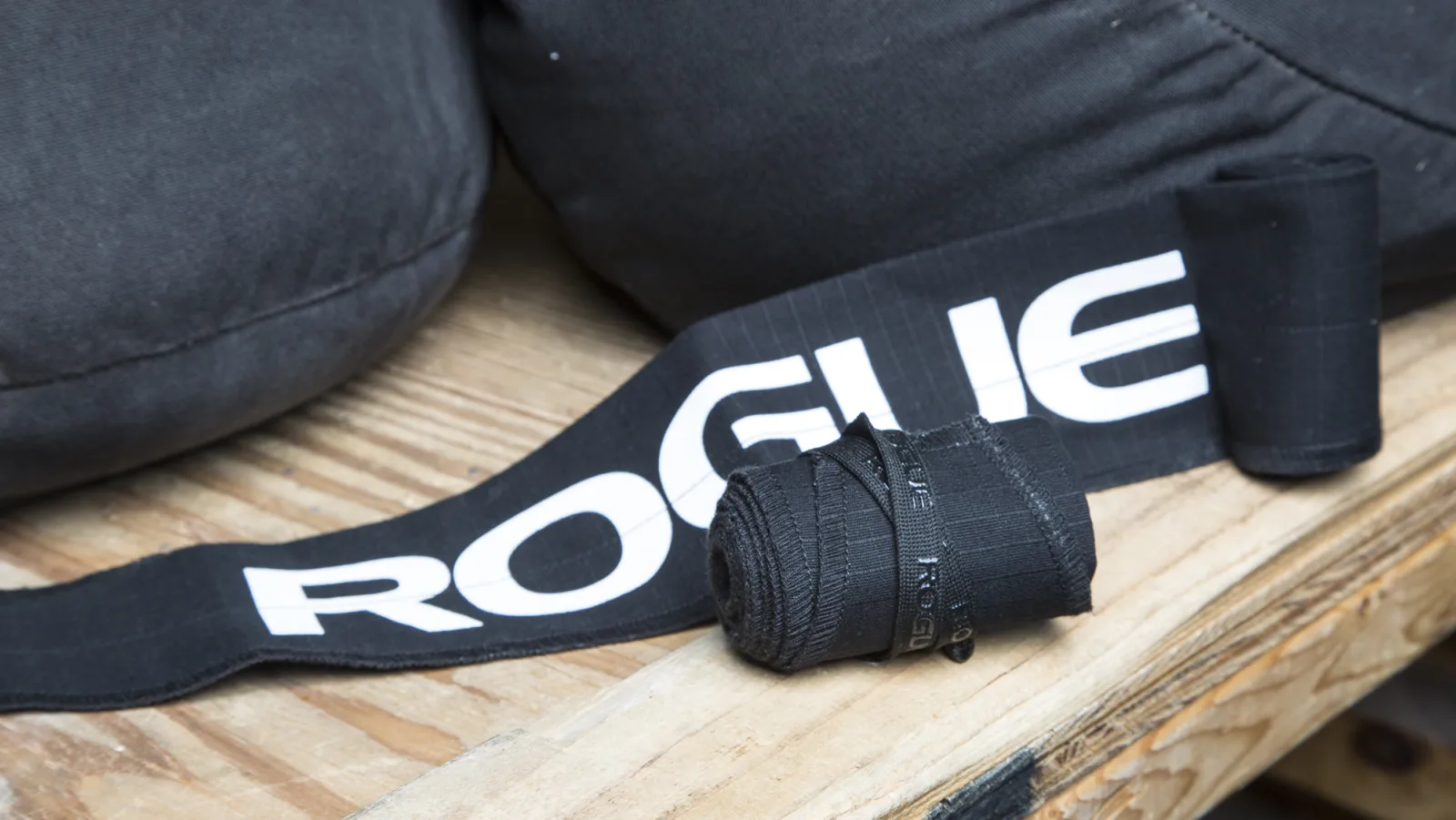
Rogue Wraps use a different design. Instead of a standard hook-and-loop wrap, Rogue describes them as 35" nylon straps with a twist-tight design for quick custom adjustment. The official specs list a 2.875" width, 0.17 lb product weight, Made in USA construction, and a $29.50 listed price when checked in July 2026.
This design makes sense for athletes who dislike fully rewrapping between movements. You can tighten for a heavier barbell set, then loosen for more range of motion before a conditioning or gymnastics movement. That is a real CrossFit use case because many workouts punish slow gear transitions.
The tradeoff is learning curve and feel. A twist-tight wrap is not the same as a conventional elastic wrist wrap, and some athletes prefer the familiar compression of hook-and-loop. Choose Rogue Wraps if fast adjustment is more important to you than a classic wrapped feel.
Common Mistakes When Buying CrossFit Wrist Wraps
The first mistake is buying for your heaviest lift instead of your normal week. If 80% of your sessions are mixed WODs, the stiffest and longest wrap may spend more time being loosened than helping.
The second mistake is ignoring the front rack. Cleans, front squats, and thrusters expose poor wrap choice quickly. If the wrap makes your rack position worse, it is not a good CrossFit fit even if it feels strong for a press.
The third mistake is assuming more compression means better support. A wrap should help you keep a stronger wrist position, but it should not hide bad loading choices, poor technique, or persistent pain.
The fourth mistake is forgetting hand protection. Wrist wraps support the wrist; they do not replace grips. If your main issue is pull-ups, toes-to-bar, or bar friction, start with our guide to CrossFit grips for pull-ups and toes-to-bar instead.
How Wrist Wraps Fit With the Rest of Your CrossFit Gear
Wrist wraps are one part of the gear system. Shoes still decide how stable you feel on lifts and how comfortable you are in conditioning work, so compare trainers in our Nike Metcon 9 vs Reebok Nano X4 vs TYR CXT-2 guide if your base feels wrong.
For heavier barbell days, wrist support pairs naturally with a belt, but the belt should solve a different problem. Use the CrossFit weightlifting belt fit guide if you are choosing torso support for squats, pulls, and mixed WODs.
If lower-body support is also on your list, compare this article with our CrossFit knee sleeves fit guide. The same principle applies: choose the support level that fits the session, not the most restrictive option you can tolerate.
Title Candidates
- CrossFit Wrist Wraps Fit Guide: Choose Support for Pressing, Front Rack Work, and Fast WOD Transitions
- Which CrossFit Wrist Wraps Fit Your WODs? A Support, Length, and Mobility Guide
- Stop Overbuying Wrist Support: How to Choose CrossFit Wrist Wraps That Move With You
- 12-Inch, 18-Inch, or Twist-Tight? A CrossFit Wrist Wrap Fit Guide for Real WODs
- CrossFit Wrist Wraps Without the Bulk: How to Balance Support and Barbell Mobility
FAQ
Do I need wrist wraps for CrossFit?
Not automatically. Wrist wraps are useful when pressing, overhead work, or high-rep barbell sessions make you want extra wrist support. They are less useful if your main limitation is technique, mobility, or pain that needs coaching or medical input.
Are stiff wrist wraps good for WODs?
Sometimes, but not always. Stiff wraps can feel secure during heavy pressing, yet they may interfere with cleans, thrusters, burpees, or gymnastics transitions. For general CrossFit classes, a flexible or balanced wrap is usually the safer starting point.
What length wrist wrap should I start with?
For mixed WODs, start shorter or medium before jumping to long wraps. A 12" to 18" traditional wrap, or a moderate-support adjustable wrap, is easier to manage during movement changes. Longer wraps make more sense for heavier strength days.
Should I wear wrist wraps for front squats and cleans?
Only if they do not block your rack position. If the wrap prevents your elbows from coming through or makes the bar sit poorly, loosen it or choose a more flexible setup. Front-rack comfort matters more than maximum compression.
Can wrist wraps replace grips?
No. Wrist wraps support the wrist. Grips protect the hands during pull-ups, toes-to-bar, and bar gymnastics. If your problem is palm friction or tearing, read the grips guide before buying more wrist support.
Source Notes
Product specs and listed prices were checked in July 2026 from the official Rogue Fitness pages for Rogue Wrist Wraps 2.0, Rogue Wrist Wraps, and Rogue Wraps. Prices, colors, reviews, and stock can change. This guide uses those official specs for product facts and separates them from editorial fit guidance.
For our approach to affiliate content and source boundaries, read the editorial policy and about page.